
Did You See Me This Time with Your Own Eyes?
FILM
Shadi Habib Allah
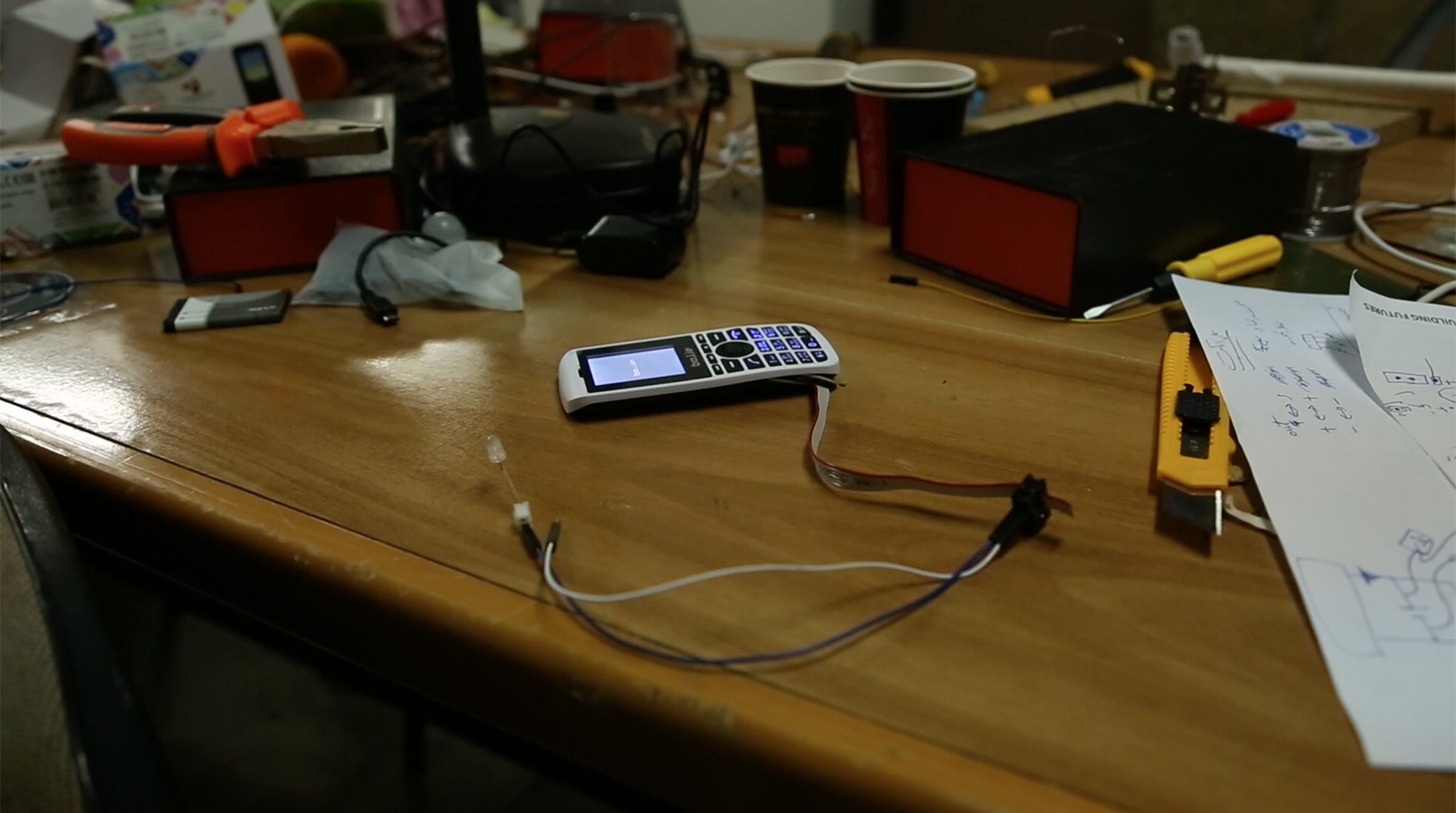
In order to shield themselves from the Egyptian government’s efforts to track their phone calls, some Bedouins in the Sinai Peninsula have opted to use old 2G phones as these devices are said to be better shielded from surveillance. They have also developed coded dialects that are inaccessible to the rest of the region’s population. Shadi Habib Allah acquired some of their cryptic conversations, managed to translate them, and had them encrypted on mini computers. A group of Palestinian engineers were given these devices and commissioned to set up a DIY 2G phone network. If set up properly, the network autonomously makes calls and provides a translation on a screen.
The engineers trying to access the Bedouin’s technology could well be Egyptian state authorities. Their efforts could easily be directed at decoding subversive exchanges between members of the Bedouins, infamous for moving goods illegally across the borders between Egypt, Palestine, and other areas around. In either case, though, their approach, the zeal of discovery, remains the same. What alters is the meaning afforded by the context – ‘invention’ in the first case, ‘hazard’ in the other.